
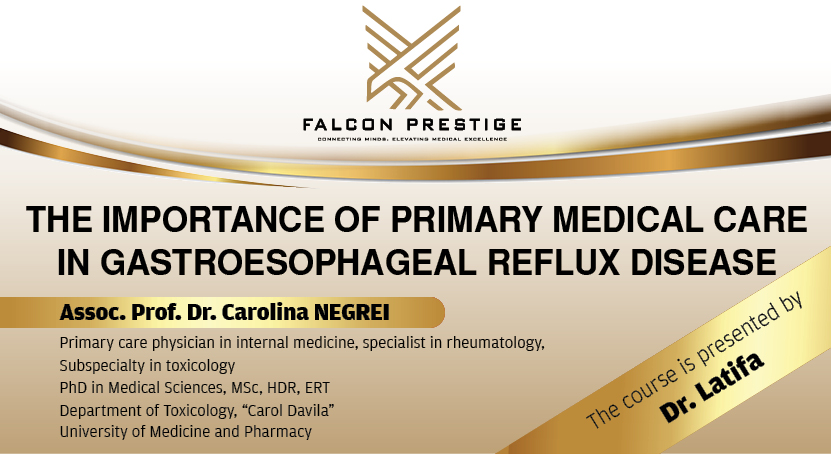
The Importance of Primary Medical Care in Gastroesophageal Reflux Disease, Part II
200,00 د.إ
Author: Prof. Carolina Negrei, MD, PhD — Internal Medicine (Primary Care) & Rheumatology; Doctor of Medical Sciences (MSc, HDR, ERT).
Discipline of Toxicology, “Carol Davila” University of Medicine and Pharmacy.
Gastroesophageal reflux disease (GERD) is a very common chronic gastrointestinal disorder, primarily characterized by the regurgitation of gastric contents into the esophagus. It is one of the most frequently diagnosed digestive disorders worldwide and, as such, represents a significant economic burden due to both direct and indirect costs, while also strongly affecting quality of life.
The previous definitions of GERD, which varied considerably among different authors, were standardized in 2006 through the so-called Montreal Consensus, according to which GERD is defined as a condition that develops when the reflux of stomach contents causes troublesome symptoms and/or complications.
Contents
I. Introduction
II. Epidemiology
III. Etiology and Risk Factors
IV. Pathophysiology
V. Classification and Clinical Manifestations
VI. Diagnosis
VII. Differential Diagnosis
VIII. Treatment
IX. Conclusions
Be the first to review “The Importance of Primary Medical Care in Gastroesophageal Reflux Disease, Part II”
Related products
Courses
Reviews
There are no reviews yet.