
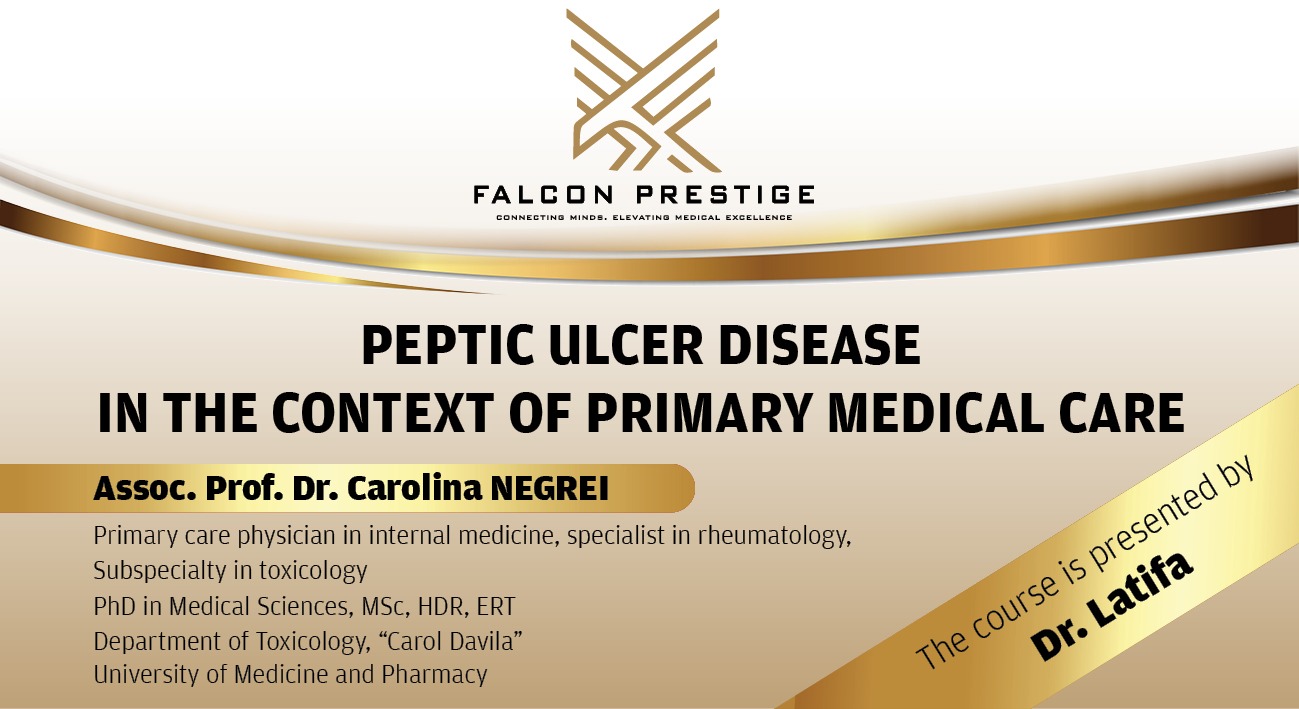
Peptic Ulcer Disease in the Context of Primary Medical Care

200,00 د.إ
Author: Prof. Carolina Negrei, MD, PhD — Internal Medicine (Primary Care) & Rheumatology; Doctor of Medical Sciences (MSc, HDR, ERT).
Discipline of Toxicology, “Carol Davila” University of Medicine and Pharmacy.
Defined as a disruption of the mucosal integrity of the stomach and/or duodenum, causing characteristic defects or excavations reaching the submucosal layer, the muscularis propria, or even deeper layers of the gastrointestinal tract wall, peptic ulcer disease remains one of the most common digestive disorders encountered in clinical practice.
The term ‘peptic ulcer disease’ refers to both gastric and duodenal ulcers. These two entities share many features but also exhibit important differences in terms of epidemiology, pathophysiology, and clinical presentation.
Contents
1. Introduction
2. Definition and Classification
3. Epidemiology
4. Etiology
5. Pathology
6. Risk Factors
7. Pathophysiology
8. H. pylori-Associated Peptic Ulcer Disease
9. NSAID-Associated Peptic Ulcer Disease
10. Clinical Manifestations
11. Diagnosis
12. Differential Diagnosis
13. Complications
14. Treatment
15. Conclusions
Be the first to review “Peptic Ulcer Disease in the Context of Primary Medical Care”
Related products


Courses

Reviews
There are no reviews yet.