
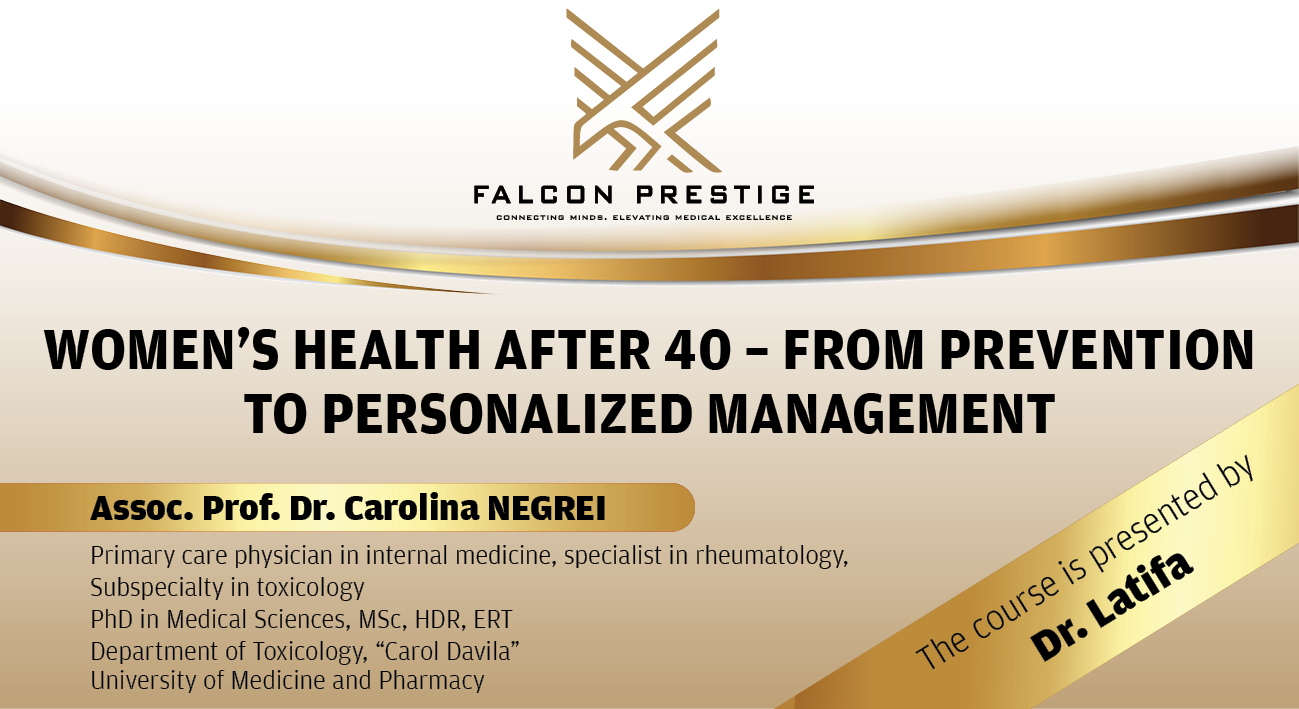
Women’s Health After 40 – From Prevention to Personalized Management
200,00 د.إ
Author: Prof. Carolina Negrei, MD, PhD — Internal Medicine (Primary Care) & Rheumatology; Doctor of Medical Sciences (MSc, HDR, ERT).
Discipline of Toxicology, “Carol Davila” University of Medicine and Pharmacy.
Today, a woman spends approximately one third of her life in the postmenopausal period, which makes maintaining health after the age of 40 a major objective of preventive medicine and public health policy. While in the past women’s medical care was predominantly focused on reproductive and maternal health, the emphasis is now shifting toward the prevention, early detection, and management of chronic non-communicable diseases, which represent the leading cause of morbidity and mortality at this stage of life.
The period after the age of 40 marks the onset of complex biological changes, characterized by the progressive decline of ovarian function, endocrine and metabolic changes, as well as the emergence of additional risk factors for cardiovascular, metabolic, osteoarticular, and neurodegenerative conditions. These transformations should not be viewed solely as an inevitable consequence of the physiological aging process, but as an opportunity to implement preventive strategies capable of reducing disease risk and improving long-term prognosis.
Contents
Chapter I. Physiological and Hormonal Changes After the Age of 40
Chapter II. Clinical Assessment of Women After the Age of 40
Chapter III. Major Health Issues After the Age of 40
Chapter IV. Prevention Strategies and Health Promotion
Chapter V. Personalized Therapeutic Management
Chapter VI. Multidisciplinary Approach and Long-Term Monitoring
Chapter VII. Current Perspectives in Women’s Medicine
Be the first to review “Women’s Health After 40 – From Prevention to Personalized Management”
Related products

Courses
Reviews
There are no reviews yet.