
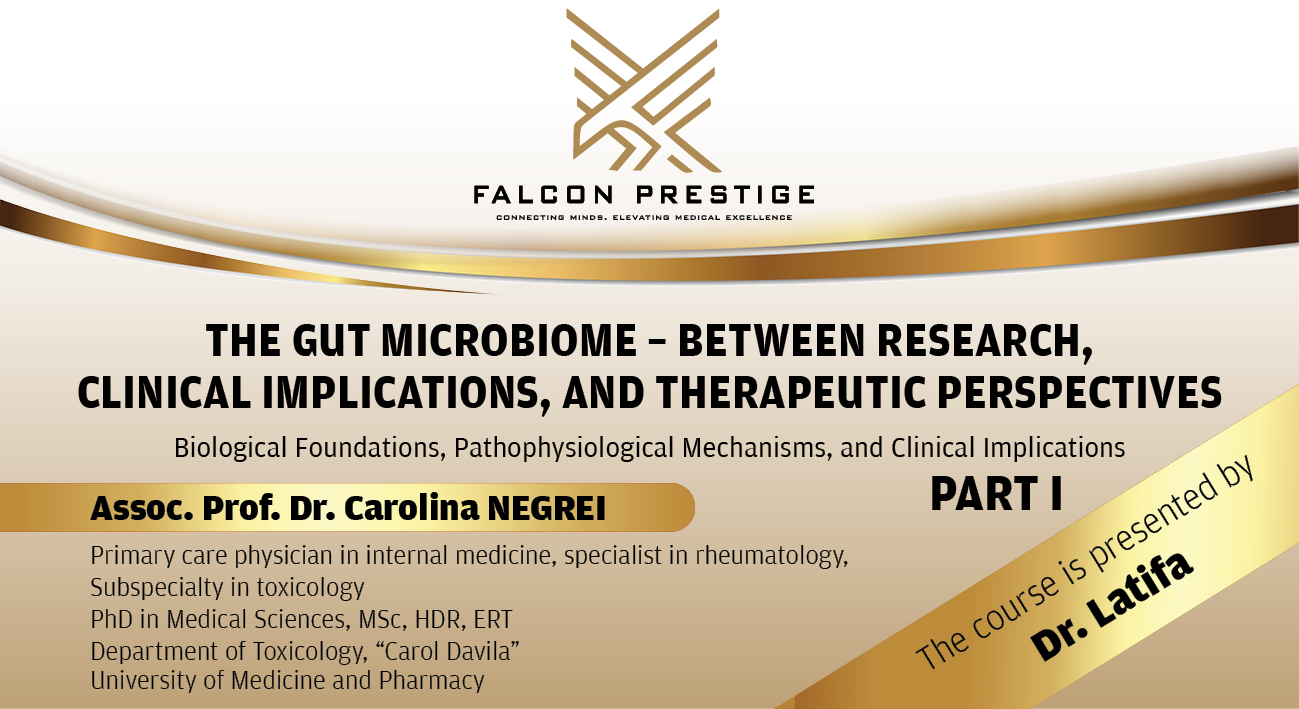
The Gut Microbiome – Between Research, Clinical Implications, and Therapeutic Perspectives

200,00 د.إ
Author: Prof. Carolina Negrei, MD, PhD — Internal Medicine (Primary Care) & Rheumatology; Doctor of Medical Sciences (MSc, HDR, ERT).
Discipline of Toxicology, “Carol Davila” University of Medicine and Pharmacy.
Over the past two decades, the gut microbiome has become one of the most intensively studied fields in modern medicine, fundamentally transforming our understanding of the relationship between the human body and the microbial communities that colonize it.
The development of high-throughput genomic sequencing technologies and multi-omics approaches (metagenomics, metatranscriptomics, metabolomics, and proteomics) has enabled the characterization of the complexity of the intestinal ecosystem and has highlighted its essential role in maintaining the body’s homeostasis.
The microbiome is no longer regarded merely as a collection of commensal microorganisms, but as a dynamic biological system with complex metabolic, immunological, and endocrine functions, capable of influencing the development, functioning, and adaptive response of the host organism.
Contents
Chapter I. The Biology of the Gut Microbiome
Chapter II. The Microbiome and Pathophysiological Mechanisms
Chapter III. Clinical Implications of the Gut Microbiome
Be the first to review “The Gut Microbiome – Between Research, Clinical Implications, and Therapeutic Perspectives”
Related products

Reviews
There are no reviews yet.