
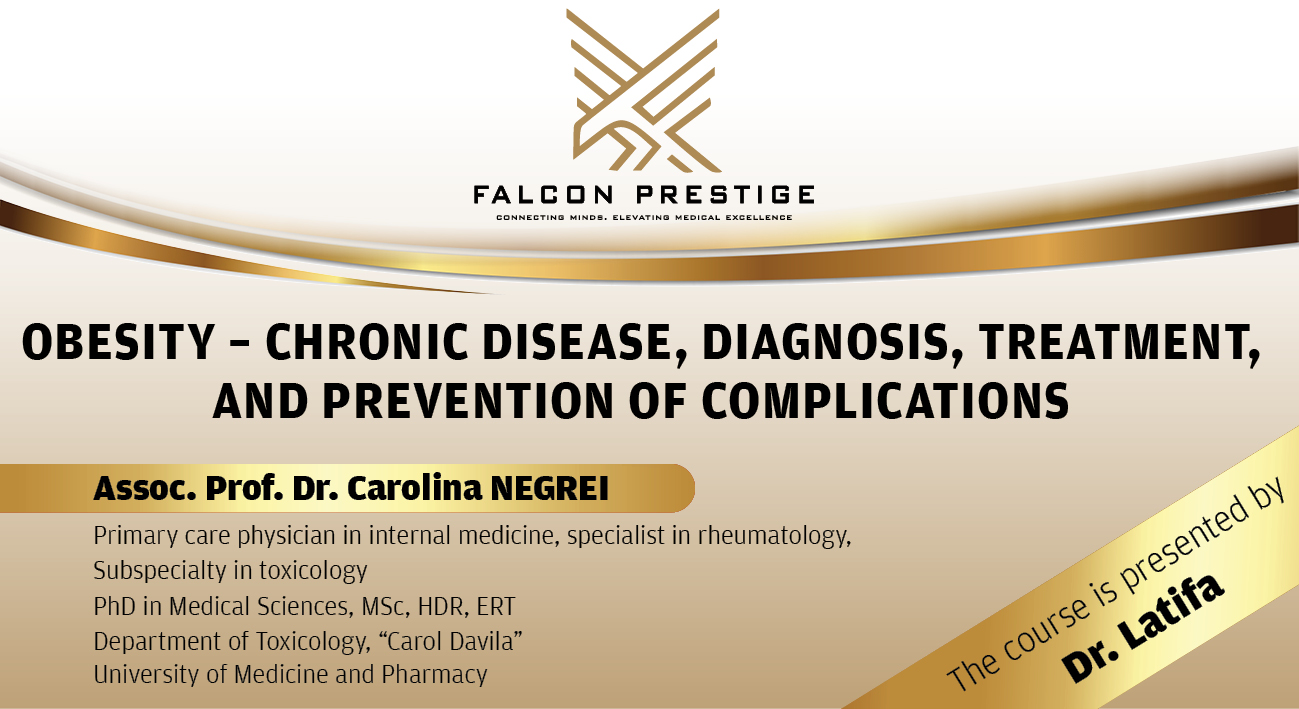
Obesity – Chronic Disease, Diagnosis, Treatment, and Prevention of Complications
200,00 د.إ
Author: Prof. Carolina Negrei, MD, PhD — Internal Medicine (Primary Care) & Rheumatology; Doctor of Medical Sciences (MSc, HDR, ERT).
Discipline of Toxicology, “Carol Davila” University of Medicine and Pharmacy.
Obesity represents one of the most important public health challenges of the 21st century, with a steadily increasing prevalence worldwide and a significant impact on morbidity, mortality, and healthcare system costs. The World Health Organization considers obesity a global epidemic, driven by the complex interaction of biological, behavioral, socio-economic, and environmental factors.
The importance of obesity as a public health issue stems not only from its high frequency but also from its association with numerous chronic conditions. People with obesity have an increased risk of type 2 diabetes mellitus, arterial hypertension, atherosclerotic cardiovascular disease, heart failure, metabolic dysfunction-associated liver disease, obstructive sleep apnea syndrome, certain forms of cancer, and musculoskeletal disorders.
Contents
Chapter I. Obesity – Definition, Classification, and Epidemiology
Chapter II. Pathophysiology of Obesity
Chapter III. Complications Associated with Obesity
Chapter IV. Diagnosis and Evaluation of the Patient with Obesity
Chapter V. Non-Pharmacological Management of Obesity
Chapter VI. Pharmacological and Surgical Treatment of Obesity
Chapter VII. Prevention of Obesity and Its Associated Complications
Be the first to review “Obesity – Chronic Disease, Diagnosis, Treatment, and Prevention of Complications”
Related products


Reviews
There are no reviews yet.